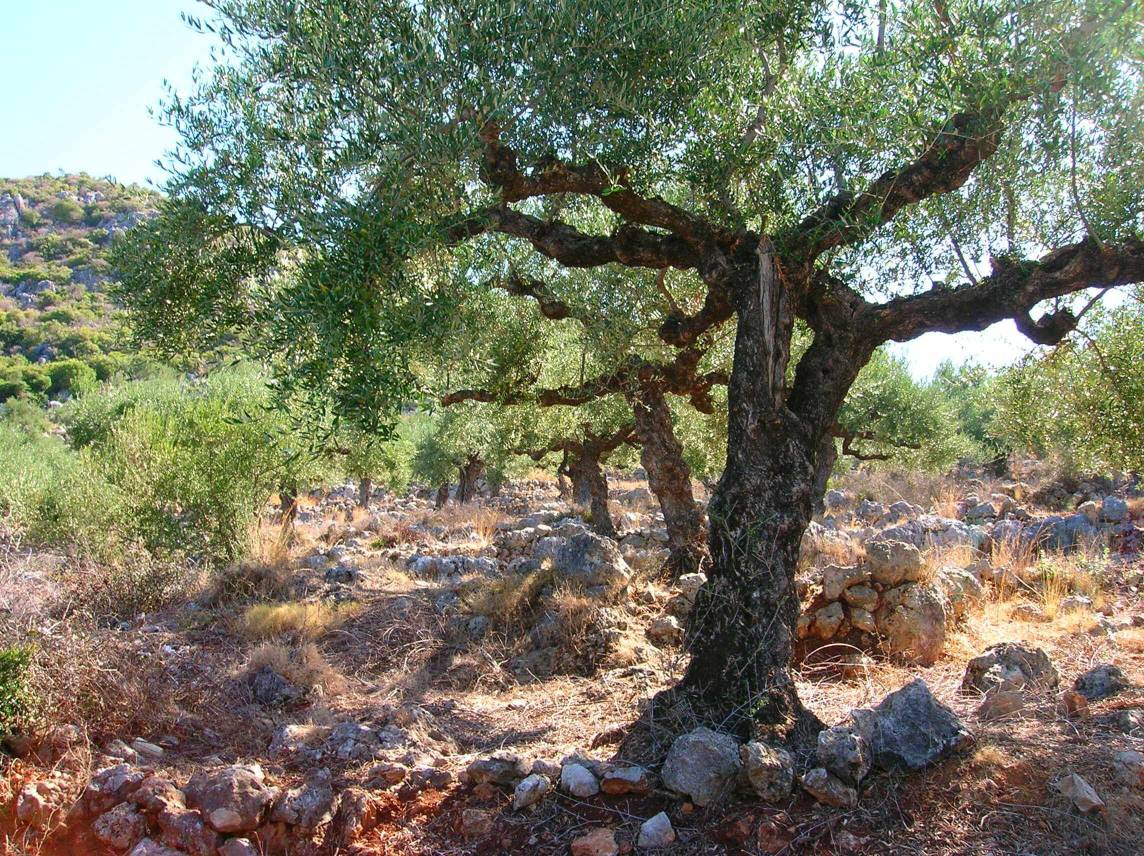
An old olive tree

The History of Greek Olives: From Ancient Roots to the Astakos Terroir

Discover the 4,000-year-old legacy of the olive tree in Greece and why authentic, historical harvesting methods still matter today.

To understand the Greek olive is to understand the history of the Mediterranean itself. For millennia, the olive tree has been a symbol of peace, wisdom, and sustenance. But in an era of rapid mass-production, understanding the history of how olives were traditionally prepared is the key to recognizing true quality today.

The Ancient Origins of Olea Europaea in Greece

What is the true history of the Greek olive? The olive tree (Olea europaea) has been cultivated in Greece for over 4,000 years, deeply woven into its mythology, economy, and diet. Authentic Greek olives are defined by this historical legacy—they are harvested by hand when naturally fully ripe, and cured using slow, natural fermentation, avoiding the chemical shortcuts of modern industrial processing.

Archaeological evidence traces olive cultivation back to the Minoan civilization on the island of Crete. In ancient Athens, the olive tree was considered a sacred gift from the goddess Athena. From nourishing Spartan warriors to fueling the oil lamps of philosophers, the olive was the lifeblood of ancient Greek civilization.

How the Ancient Tradition Survives Today

While modern supermarkets are filled with chemically processed imitations, true Greek olive artisans still abide by the historical "pillars" of cultivation. Here is how traditional methods compare to modern shortcuts:

1. Hand-Harvesting

Historically, olives were gently picked by hand to avoid bruising. Today, premium Astakos olives are still harvested carefully to ensure the fruit's integrity remains perfect before curing.

2. Natural Ripening

Ancient Greeks allowed olives to ripen naturally under the sun. We continue this practice, never using artificial darkening agents (like ferrous gluconate) to fake a mature color.

3. Brine & Time

Before industrial lye was invented, olives were debittered using simple sea salt, water, and months of patience. This slow fermentation is exactly how Kalantzis Foods prepares olives today.

The Astakos Terroir: Preserving History

At Lazaros Kalantzis Foods, history is not just a story; it is our standard operating procedure. By growing and curing our olives in the fertile, sea-swept region of Astakos, we honor the ancient Greek methods. We refuse to accelerate the process, ensuring that every jar and vacuum-sealed bag contains a piece of authentic Mediterranean heritage.

Experience Authentic Greek History

Taste the difference that 4,000 years of tradition makes. Try our naturally cured, deeply flavorful Astakos olives.

Discover Our Traditional Olives

Historical review

The history of the olive tree begins before the invention of writing. Historians consider the most likely place of origin of the olive tree to be the regions of Syria and Anatolia, whose mountain slopes are overgrown with wild olives. This element, however, cannot be proof, because today we meet wild olive trees throughout the Mediterranean, in Greece, on the northern coast of Africa, in Spain, but also Turkey. In particular, wild olive trees are found in Greece from the slopes of Mount Olympus to Psiloritis in Crete and from the Ionian Islands to the islands of the Aegean.

The historian Theophrastus mentions that the olive tree grew in Greece, in South Italy, Syria, and Arabia (towards the sea), in Egypt and elsewhere.

The olive tree is one of the oldest cultivated trees on our planet as its cultivation dates back 6000 or more years ago. Sources from Egyptian literature testifies that it was also cultivated in Egypt past the olive tree. But around 2000 BC, the olive groves disappeared, perhaps due to destruction from an unknown cause or there is also the possibility that the population at that time to turn to another crop. Then, it is believed that there was population movement towards the southern coasts of Crete, who probably carried the olive tree with them.

Other historical sources state that the olive tree was introduced by the Phoenicians in Greece, Syria, and Carthage during the pre-Homeric era. Of all the ancient races only the Assyrians, Babylonians, Semites, and Armenians knew well the olive tree. The Greeks and later the Romans and the Jews, gave in the "holy tree" its prominent position. For the Ancient Greeks, the olive tree was a sacred tree. It was directly connected to their daily life, as it constituted part of their diet, religion, and decoration of objects. The olive was a symbol of peace, wisdom, and victory. In ancient times, the winners of the Olympic games were crowned with an olive branch. Thus, the olive constitutes to this day a symbol of the Olympic idea.

Finally regardless of the origin and the method of propagation of the olive tree, what must be noted is the fact that its cultivation spread throughout the area of the European continent, where the current name is "European Olive" (Olea europaea). In particular, the climatic conditions of the Mediterranean basin were very favorable for the cultivation of the olive tree, and quickly spread to all Mediterranean countries of which it is today the main feature. Main representatives of olive tree cultivation in the Mediterranean basin are (in order the countries with the largest number of trees): Spain, and Italy, followed by Greece, Portugal, Tunisia, Algeria, and Morocco.

However, during the previous century the cultivation of the olive tree also extended to areas of the American continent that have similar ones climatic conditions to those of the Mediterranean, such as California in N. America, Argentina, Chile, Uruguay, and Peru of South America. Attempts to cultivate olive trees have also been made in Australia.